

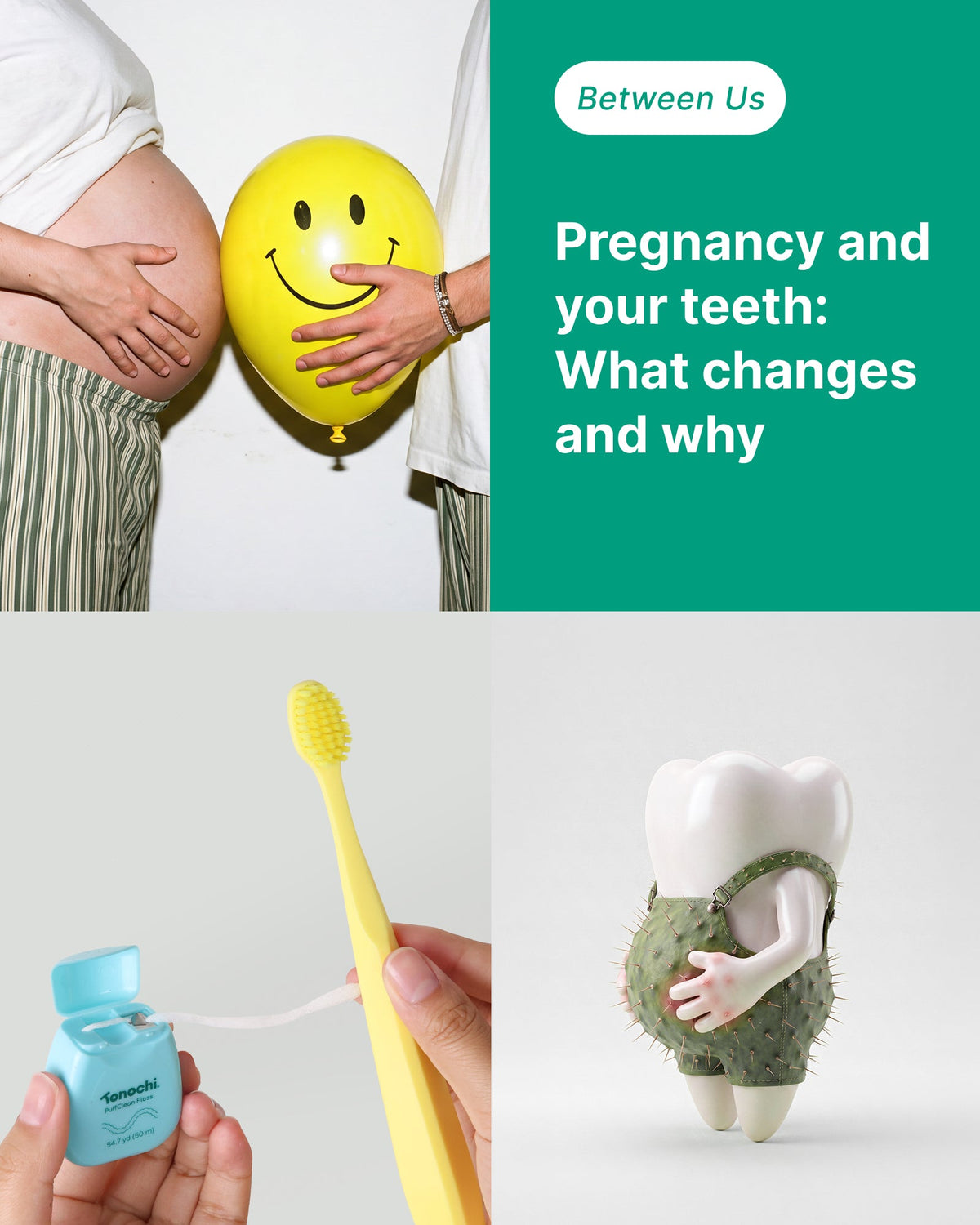
Pregnancy and Your Teeth: What Changes and Why
Pregnancy changes a lot in the body, and your mouth is no exception. Hormonal shifts during pregnancy can significantly affect your gums, sometimes in ways expecting parents don't see coming.
Rising levels of estrogen and progesterone increase blood flow to the gums and heighten their response to plaque. This can lead to what's commonly called "pregnancy gingivitis", swollen, tender, and sometimes bleeding gums, affecting an estimated 60 to 75 percent of pregnant women. It typically starts in the second month and can peak around the eighth month.
The good news is that pregnancy gingivitis is very manageable. Brushing gently twice a day, flossing daily, and keeping up with dental checkups (which are safe throughout pregnancy) make a real difference. Left unaddressed, gum inflammation during pregnancy has been linked to other complications, which is exactly why staying consistent with oral care matters even more during this time.
Your body is doing an incredible amount of work right now. A few extra minutes of gentle, consistent oral care is a small way to support it, and it's one of the easier things to stay on top of during a season that's anything but easy.
