

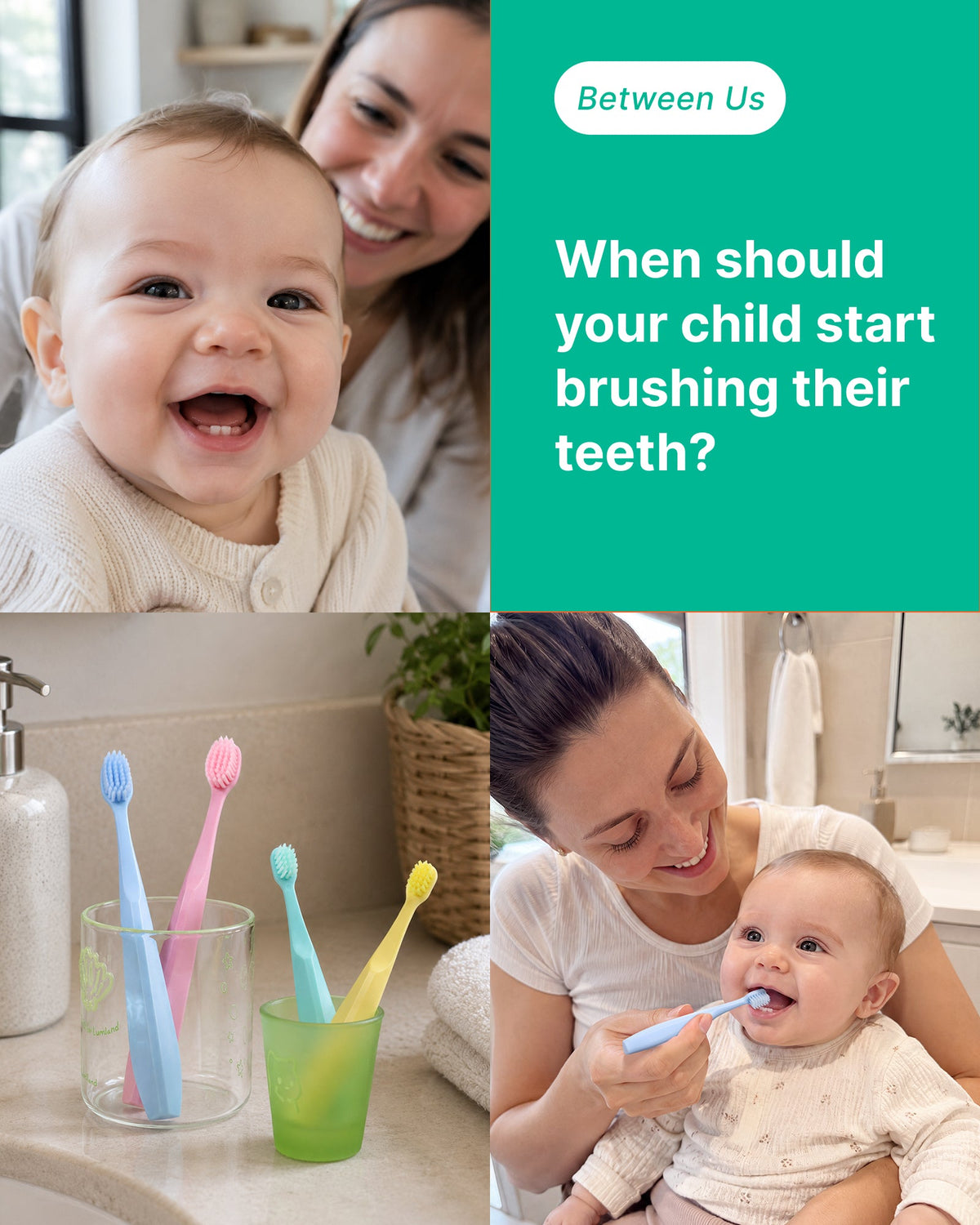
When should your child start brushing their teeth?
The moment the first tooth appears, brushing should start. Not at age two. Not when a full set comes in. As soon as that first little tooth breaks through the gum, usually around 6 months, it's time to reach for a toothbrush.
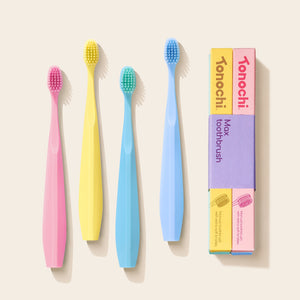
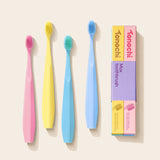
For infants, that means a soft, tiny brush and a rice-grain-sized smear of fluoride toothpaste, twice a day. It might feel unnecessary this early, but baby teeth are just as vulnerable to decay as adult teeth, and cavities can form quickly in young mouths. Starting early also builds the habit before your child is old enough to resist it.
As more teeth come in, the routine grows with them. By age 3, most kids can use a pea-sized amount of toothpaste and start learning to spit instead of swallow. Full independence in brushing usually doesn't happen until around age 6 or 7, when their hand coordination catches up. Until then, a parent's help (or at least supervision) makes a real difference.
Starting early isn't about perfection. It's about consistency. Every brushing session, even the messy ones, teaches your child that this is simply part of the day. That habit will carry them for life.
